


Workout Summary
- Main GoalBuild Muscle
- Workout TypeSplit
- Training LevelBeginner
- Program Duration8 weeks
- Days Per Week5
- Time Per Workout45-65 minutes
- Equipment RequiredBodyweight, Dumbbells, Other
- Target Gender Male & Female
- Recommended Supps
- Workout PDF Download Workout
Workout Description
There is a lot of discussion and many milestone lifts being celebrated on the M&S Bench Press Calculator. If you scroll through the comments, you’ll see lifters of all ages and experience levels sharing personal records and big achievements. That’s great to see, but some readers may feel left out because they either don’t train with a barbell or only have access to dumbbells at home.
This program is for you.
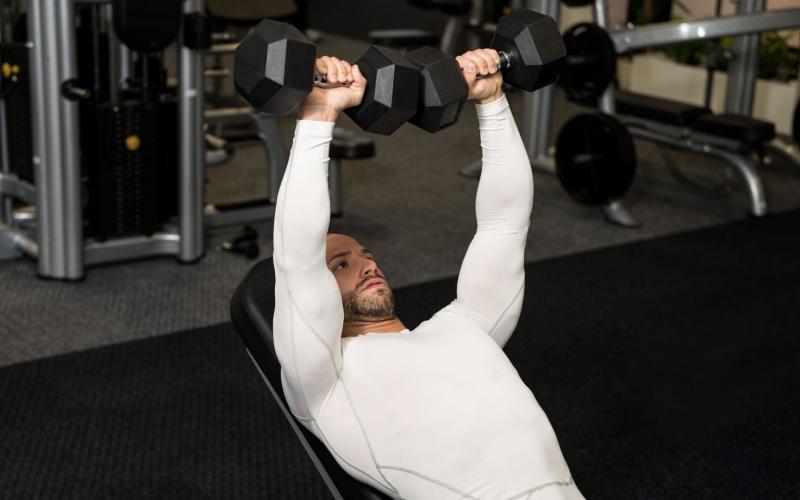
This 8-week dumbbell bench press program is designed to help increase strength, improve pressing performance, and build confidence with dumbbell training. Even without a barbell, you can still develop serious upper-body power and improve your chest, shoulders, and triceps while working toward a stronger dumbbell bench press.
Who Should Follow This Dumbbell Bench Press Program?
This workout program is ideal for beginners and intermediate lifters who want to get stronger with dumbbells while avoiding some of the discomfort or limitations that can come with heavy barbell bench pressing. It can also be a great option for people training in a home gym with limited equipment.
While dumbbells may not be the first choice people think of for strength training, they can still be extremely effective for building pressing power and improving muscular development. Dumbbells also require more stabilization and control, which can help improve overall pressing mechanics and coordination.
Most commercial gyms carry dumbbells up to 100 pounds, while some gyms may offer pairs as heavy as 120 or 125 pounds. If you eventually reach the point where you can press those weights for reps, then you may be ready to move on to a more advanced barbell bench press strength program.

Best Dumbbells for a Home Gym
Gym members should have little trouble following this plan, but home gym users may not have access to a full dumbbell rack. Fortunately, there are still several good options for building strength at home.
Adjustable Dumbbells
Adjustable dumbbells are one of the best investments for a home gym because they provide multiple weight options while taking up minimal space. Many popular sets range from 5 to 60 or 70 pounds, while heavier models may go up to 90 or even 100 pounds per dumbbell.
They also make weight changes quick and convenient, which helps workouts flow more smoothly. While the initial cost can be higher, a quality pair can provide years of reliable training.
Plate-Loaded Dumbbell Handles
Plate-loaded handles are often a more affordable option and allow you to add weight gradually over time. Just make sure both dumbbells are loaded evenly so the resistance stays balanced on each side.
The biggest drawback is that changing weights takes more time compared to adjustable dumbbells. However, these handles are durable, versatile, and can often support much heavier loads, making them a solid long-term choice for stronger lifters.
No Bench? You Can Still Build Strength
Having an adjustable weight bench is helpful, but it is not mandatory for this program. If you do not have access to a bench, you can still perform most of the movements on the floor or another stable surface.
If an exercise calls for an incline variation, simply substitute a flat version instead. Seated exercises can also be performed on a sturdy chair if necessary. The key is consistency and progressive overload, not having perfect equipment.
How to Test Your Dumbbell Bench Press Max
Even though dumbbells can feel safer than a barbell, it is still smart to have a training partner or spotter nearby when testing a heavy lift. This can help improve both safety and confidence during max attempts.
To test your dumbbell bench press max, begin with the dumbbells locked out at the top of the movement. Lower the weights under control until they reach your chest, pause briefly, and then press them back to the starting position.
If you can complete one clean rep, you have found your max. If the weight feels too easy, increase it slightly. If you miss the rep, reduce the load and try again after resting.
Weekly Training Schedule Overview
This program uses five training days each week with a balance of heavy pressing, recovery-focused work, and full-body strength training. The goal is to improve dumbbell bench press performance while still allowing enough recovery to make steady progress over the full eight weeks.
A sample weekly schedule would look like this:
- Monday - Heavy Bench Day
- Tuesday - Lower Body Day
- Wednesday - Rest or Light Cardio/Stretching
- Thursday - Light Bench Day
- Friday - Upper Body Day
- Saturday - Full Body Day
- Sunday - Rest
Heavy Bench Day Progression Chart
Once you know your max, you will use percentages of that weight throughout the program. Over the next seven weeks, the weights will gradually increase to help improve strength, technique, and confidence with heavier dumbbells. In Week 8, you will back off the volume slightly and test for a new max.
The progression for the heavy dumbbell bench press workouts is as follows:
- Week 1 - 75%
- Week 2 - 78%
- Week 3 - 81%
- Week 4 - 84%
- Week 5 - 87%
- Week 6 - 90%
- Week 7 - 93%
- Week 8 - Test New Max
This gradual progression helps build strength while reinforcing technique and confidence. During Week 8, reduce accessory volume if needed so you are fully recovered for your max attempt.

8-Week Dumbbell Only Workout
Day 1: Heavy Bench Day
This is your primary strength day and the most important workout of the week. The focus here is moving heavy weight with strong, controlled reps. Each week, you’ll increase intensity based on your max.
Train your accessory movements heavy as well, but stop 1-2 reps short of failure. This will help you build strength without burning out too early in the program.
| Exercise | Sets | Reps | Rest |
|---|---|---|---|
| Dumbbell Bench Press (see progression chart) | 3 | 3 | 2 min |
| Incline Dumbbell Flys | 3 | 4-6 | 90 sec |
| Decline Push Up (Feet on Bench) | 3 | 6-8 (slow reps) | 90 sec |
| Seated Dumbbell Tricep Extension | 3 | 6-8* | 90 sec |
*If you have heavy dumbbells, do two arm extensions. If not, go with single arm.
Day 2: Lower Body Day
Physique development isn’t the primary goal of this program, but you still want to train the entire body and continue making progress. This session provides enough volume to maintain and build lower-body strength without taking away from your pressing performance.
Take a rest day after this workout.
| Exercise | Sets | Reps | Rest |
|---|---|---|---|
| Dumbbell Squat | 3 | 8-10 | 60-90 sec |
| Dumbbell Bulgarian Split Squat | 3 | 8-10 each | 60-90 sec |
| Dumbbell Stiff Leg Deadlift | 3 | 8-10 | 60-90 sec |
| Single Leg Hip Thrust with Dumbbell | 3 | 8-10 each | 60-90 sec |
| Standing Calf Raise | 3 | 8-10 each | 60-90 sec |
Day 3: Light Bench Day
This session focuses on technique, control, and dumbbell speed. You’ll use lighter weights, but place more emphasis on tempo and execution.
For sets of 3-5 reps with very light weight, use a weight that's around 50-55% of your max. Lower the weight slowly (3-5 seconds), pause under control (3-5 seconds), then press as explosively as possible. This helps improve power output and reinforces proper pressing mechanics.
You’ll also perform higher-rep accessory work to support recovery and build muscular endurance. This workout is shorter, but still very effective.
| Exercise | Sets | Reps | Rest |
|---|---|---|---|
| Dumbbell Bench Press | 5 | 3-5 | 60-90 sec |
| Dumbbell Flys | 3 | 12-15 | 60-90 sec |
| Standing Dumbbell Front Raise | 3 | 12-15 | 60-90 sec |
| Lying Dumbbell Extension | 3 | 12-15 | 60-90 sec |
Day 4: Upper Body Day
This workout shifts focus to the rest of the upper body, primarily back, shoulders, and arms. Building these muscle groups will support your pressing strength and improve overall balance.
Start lighter and build up across sets. Push hard on your final set for each movement, but keep 1-2 reps in reserve. The only exception is push ups, where you can go to failure.
| Exercise | Sets | Reps | Rest |
|---|---|---|---|
| Dumbbell Pullover | 3 | 6-8 | 60-90 sec |
| One Arm Dumbbell Row | 3 | 6-8 each | 60-90 sec |
| Dumbbell Shrug | 3 | 6-8 | 60-90 sec |
| Bent-Over Lateral Raise | 3 | 6-8 | 60-90 sec |
| Seated Lateral Raise | 3 | 6-8 | 60-90 sec |
| Alternating Standing Dumbbell Curl | 3 | 6-8 | 60-90 sec |
| Concentration Curl | 3 | 6-8 | 60-90 sec |
| Triceps Kickback | 3 | 6-8 | 60-90 sec |
| Push Up | 1 | Failure* | 60-90 sec |
*If you can do more than 25 push ups, do them with feet elevated.
Day 5: Full Body Day
This session gives additional attention to the rest of the body without overloading your chest and pressing muscles. Keep the weights moderate and focus on clean, controlled reps.
If you’re short on time, perform 2 sets per exercise. If you want more volume, go with 3. Either approach will be effective as long as the intensity is appropriate.
Take one to two rest days after this workout.
| Exercise | Sets | Reps | Rest |
|---|---|---|---|
| Wide Stance Goblet Squat | 2-3 | 8-10 | 60-90 sec |
| Walking Lunges (per leg) | 2-3 | 8-10 | 60-90 sec |
| Seated Dumbbell Calf Raise | 2-3 | 8-10 | 60-90 sec |
| Side Bends (per side) | 2-3 | 8-10 | 60-90 sec |
| Bent Over Dumbbell Row | 2-3 | 8-10 | 60-90 sec |
| Arnold Press | 2-3 | 8-10 | 60-90 sec |
| Hammer Curl | 2-3 | 8-10 | 60-90 sec |
| Dumbbell Overhead Extension | 2-3 | 8-10 | 60-90 sec |
Nutrition and Recovery
Of course, eating properly and focusing on recovery will be vital to your success in this program. We have several tips and features here on M&S to help you learn more about that, but this quick guide can at least get you started.
Nutrition:
- 1 gram of protein per pound of bodyweight
- 1-2 grams of carbohydrates per pound of bodyweight
- .3-.4 grams of fat per pound of bodyweight
- 1 gallon of water a day
- Supplements (Optional): Creatine, whey protein, pre-workout


0 Comments